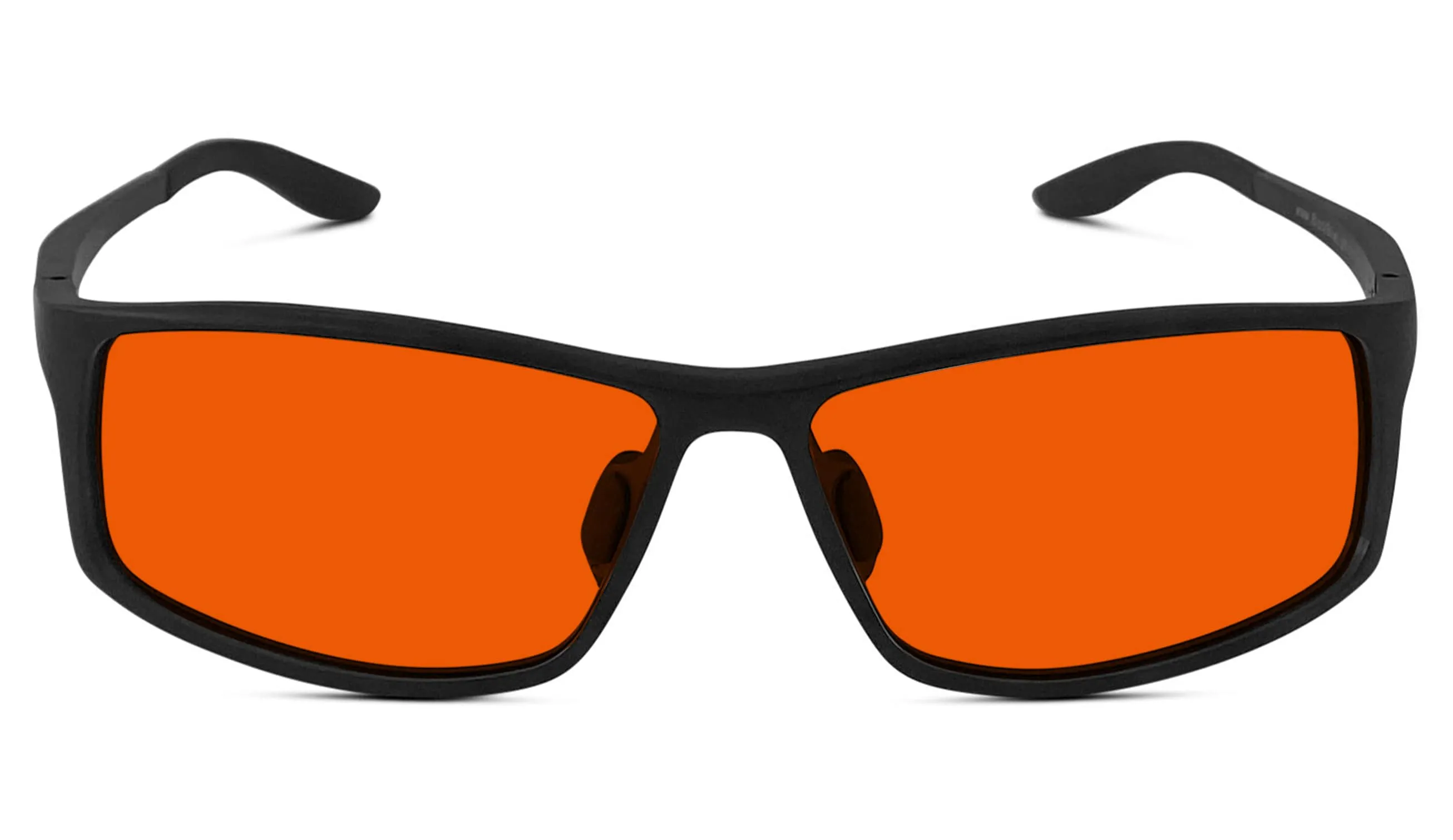
Blue light glasses are now a fixture on pitches, in studios and on bedside tables. Footballers wear amber-tinted lenses through ninety minutes. Streamers swear by clear “blue blockers” for late nights. The marketing promises sharper focus, less eye strain, better sleep and even retinal protection.
So do they work? The honest answer is that it depends entirely on which claim you are testing — and for most of them, the best available evidence is underwhelming.
The strongest evidence points the other way
The most rigorous look at this question is a 2023 Cochrane systematic review, which pooled 17 randomised controlled trials comparing blue-light filtering spectacle lenses against ordinary lenses. Cochrane reviews sit at the top of the evidence hierarchy, so this is as close to a verdict as the field currently has.
The headline findings were not kind to the marketing:
- Eye strain. Blue-light filtering lenses probably make little to no difference to visual fatigue from screen use over the short term.
- Vision. There was probably little or no effect on best-corrected visual acuity.
- Sleep. Results were inconsistent and uncertain — some trials reported better sleep scores, others none, and the overall certainty was very low.
- Retinal protection. There was no evidence that the lenses protect the macula from light-induced damage.
The reviewers’ conclusion was blunt: the current evidence does not support prescribing blue-light filtering lenses to the general population.
Why the mechanism is weaker than it sounds
Two numbers explain a lot. Commercial blue-light lenses typically filter only around 10–25% of blue light. And the blue light your eyes receive from a screen is roughly a thousandth of what you get from natural daylight.
Filtering a small fraction of an already-small dose is unlikely to move the needle on eye strain. Most of what people call “screen fatigue” is better explained by reduced blinking, fixed focus, glare and long unbroken sessions — none of which a lens coating fixes.
Where there is a more interesting story: timing, not tint
The sleep claim deserves a fairer hearing, because the underlying biology is real. Evening light exposure — especially short-wavelength light — can suppress melatonin and push your body clock later. For an endurance athlete juggling early sessions, travel and poor sleep, that matters.
But the biology supports a behaviour, not necessarily a product. Reducing bright light in the hours before bed, dimming screens, and getting strong light in the morning are well-supported circadian strategies. Whether a pair of glasses that removes a slice of blue light replicates that effect is exactly where the trial evidence goes wobbly and inconsistent.
In other words: the lever is light timing and dose. Blue blockers are one possible tool for pulling that lever in the evening — plausible, low-risk, but far from proven.

If the real lever is light timing and dose, this is the tool that actually pulls it: a sunrise-simulating wake light that floods you with strong morning brightness to anchor your body clock, then fades warm at night. Far better evidenced than any tinted lens — and used in elite sport for exactly this. UK-made.
And the footballers?
The amber glasses worn during daytime matches are a different claim again. Here the rationale is usually about glare, contrast and visual comfort under stadium lighting and floodlights, not about sleep or screens. That is a more modest, more believable promise — a tinted lens changing how a bright, high-contrast environment looks — but it is not the same thing as the “blue light damages your eyes and ruins your sleep” pitch used to sell evening blockers. Conflating the two is where a lot of the confusion lives.
The verdict
For reducing screen eye strain or protecting your eyes, the best evidence says blue light glasses probably do not work, and you should not buy them for that reason.
For sleep and circadian timing, the principle of cutting evening light is sound, but blue-blocking glasses are an unproven, optional way to apply it — cheap and harmless enough to experiment with, not something to rely on.
For daytime sport, tinted lenses are really a glare-and-comfort decision, and should be judged as such.
If you take light seriously as a performance variable, the move is to manage the dose and the timing of the light you actually get — morning brightness, dimmer evenings, smart use of screens — rather than to expect a lens coating to do the work for you.
This article is independent and evidence-led. We don’t sell glasses, and product mentions are never paid placements.